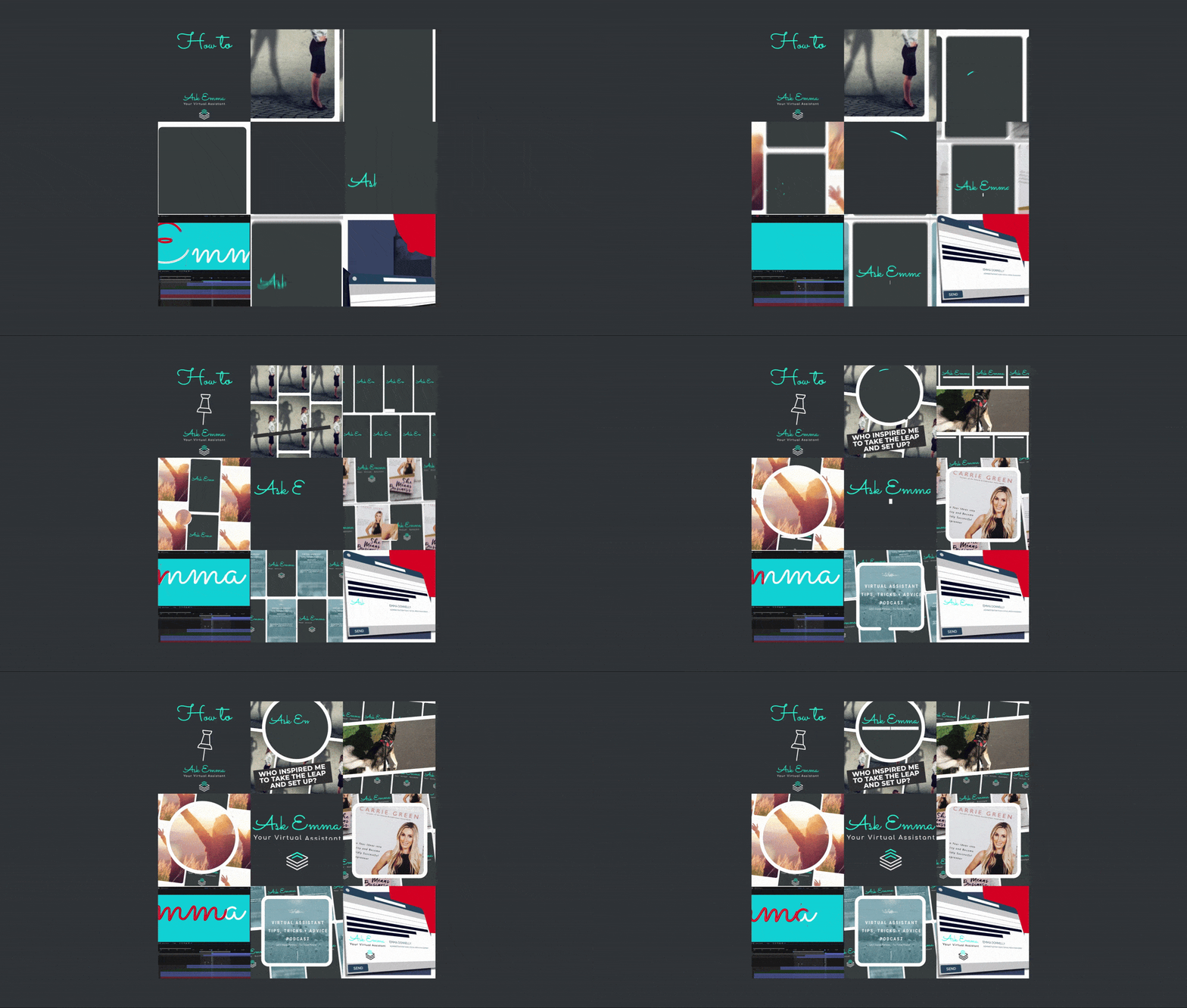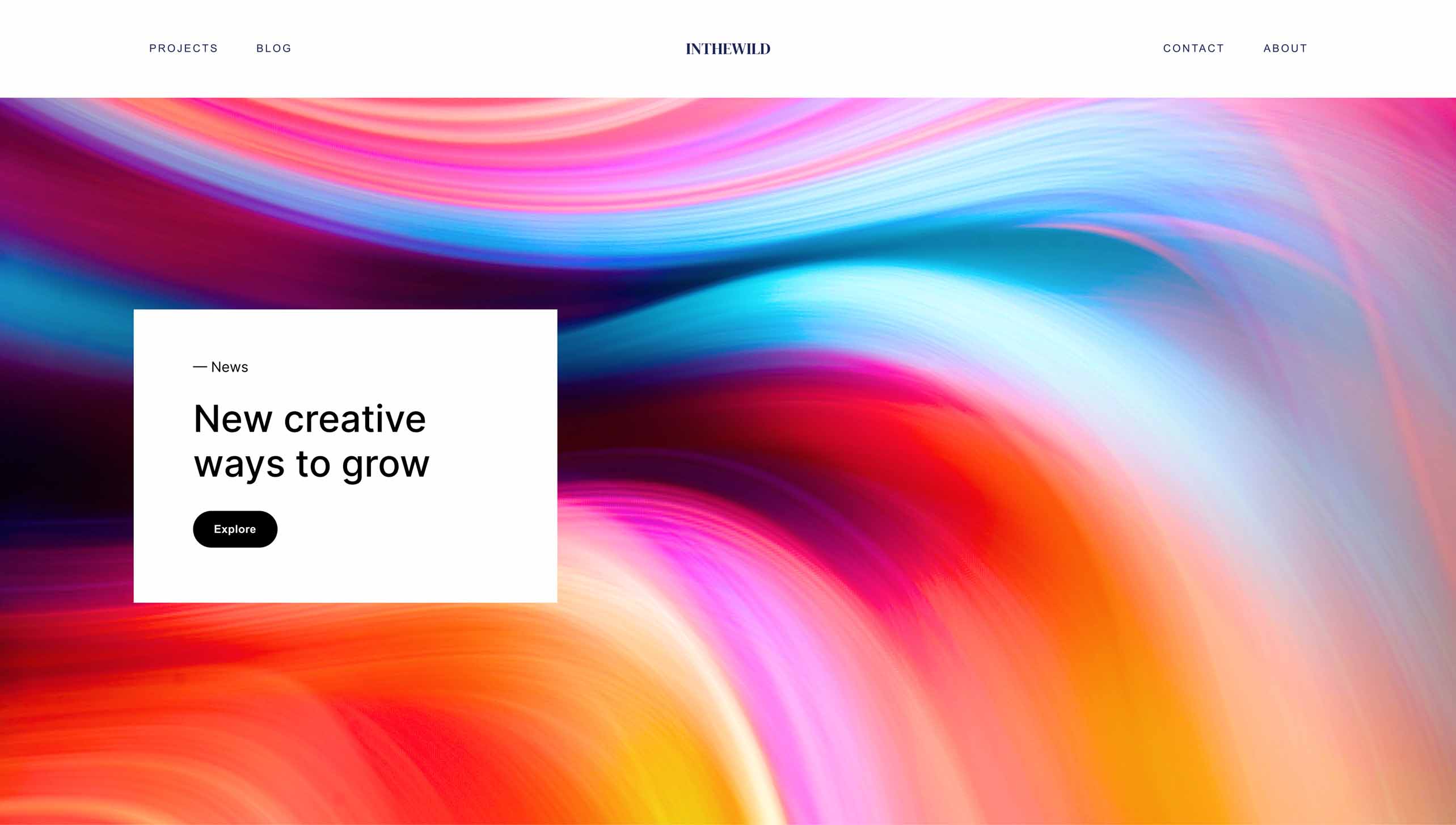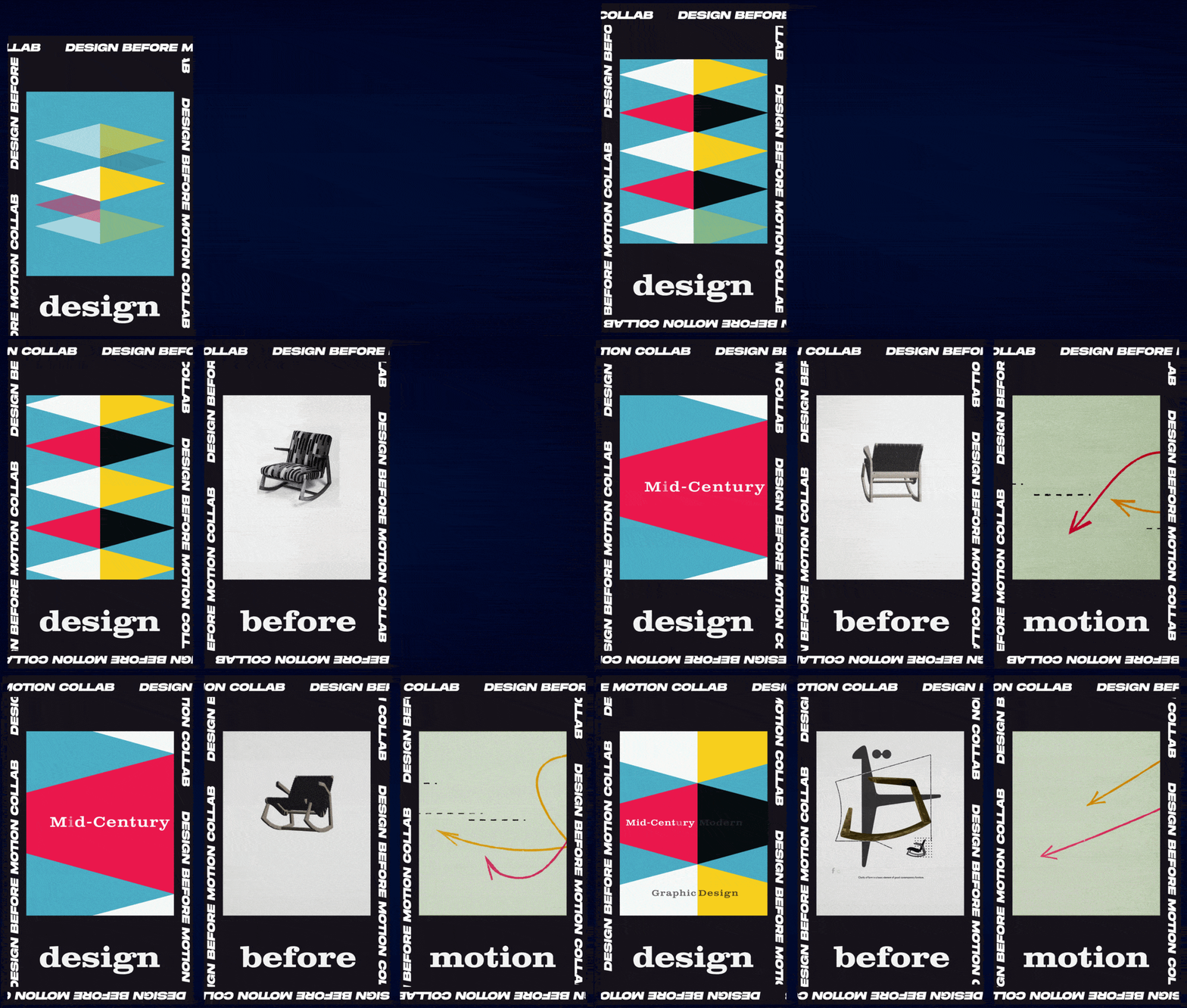
Motion design, commonly referred to as motion graphics is the term used for when we see graphics (illustration, lines, shapes, colour), typography (words, headlines, body copy), imagery (photography and scanned images) and 3D elements move around on screen.
Sometimes motion design or motion graphics is referred to as animation. While this is technically true (since a motion designer's method to move elements is via animation), 'animation' traditionally refers to the technique used to create films such as Cinderella, Toy Story or Minions. Think Pixar, classic Disney or anime and is usually about characters and story. A whole world brought to life frame by frame.
On the other hand, motion design is the fusing together of the combination of static designed elements, created by a graphic designer and setting them all in motion. It's usually about communication. Explaining an idea, branding a product, guiding a user, or just making something look great for anything between 5 seconds to 2 minutes. When I make anything move on screen it's always to communicate an idea, offer, event or generate emotion and set the tone for an audience.
Motion designers aren't typically animating animals or characters with feelings and a backstory. We're animating a chart that builds itself on screen, a logo that assembles out of nothing, or text that lands in perfect rhythm with a voiceover and audio track.
There's plenty of overlap of course. I know lots of motion designers who dabble in character work, and plenty of animators who do brand stuff on the side.
My clients are typically based in FMCG, Finance, Fintech and Pharma. Most of the time I'm requested to create motion graphics to highlight campaigns on social media, internally for in-house teams, during events using client's branding and to promote new products.
I was hired to create a 2 minute video for Citi Bank that combined edits of their recent Copenhagen town-hall conference together with motion graphic design. I had to make sure that the final video was engaging enough for viewers to watch to the end. The world of finance can be dry so I had to impress using my knowledge of animation to make the video stand out enough and deliver visual impact. Working closely with the agency's producer and storyboard artist, I received several video edits and storyboard designs in addition to voiceovers and music tracks. I also had to stick to strict brand guidelines while building the structure of the video and style of motion design. Once the video was complete I received the feedback that the client's Director-level members were really happy and excited to share it with their teams. Based on the positive impact the video had with Citi's teams, I was booked for the following year's event edit 12 months in advance!
The fabulous Martin Whiskin and Joe Gallant of 5 Minute Business Friends podcast asked me to hop on board and share my thoughts about what motion design actually is. With 25 years of experience, I've seen a few changes to the industry. Some of the tools and techniques may have moved on but motion design has essentially remained the same. See what I have to say (in, yes five minutes :)).
You've probably seen motion design fifty times today already and have no idea what the medium's called:
Long before 'motion graphics' was a phrase, experimental filmmakers in the 1920s were animating shape and colour just to see what would happen. The discipline's roots trace back to the abstract animated films made by artists like Walther Ruttmann, Hans Richter, Viking Eggeling, and Oskar Fischinger. No clients, just people treating colour and shape like instruments in an orchestra.
One of my favourite designers for film is Saul Bass. He showed up and ruined boring movie credits forever. With Otto Preminger's The Man with the Golden Arm in 1955, Bass pioneered the notion that opening credits didn't have to be a static list of names. They set the entire emotional tone of a film before it even started. A few years later he'd go on to design the main titles for three of Alfred Hitchcock's most famous films Vertigo, North by Northwest, and Psycho, between 1958 and 1960. Without knowing it, he'd invented 'the cool opening credits sequence' as an entire genre.
The actual term 'motion graphics' dates to 1960. Animator John Whitney launched a studio called Motion Graphics, Inc. to produce animated titles and logos, which connected experimental film with commercial broadcast work. TV broadcasters were doing something similar around the same time. The BBC had designers like Bernard Lodge on staff from 1959 on, creating some of the earliest Doctor Who title sequences.
Then home computing arrived which made animation and motion design more accessible to me and many others. I was no longer confined to only learning at work using Quantel's Hal Express and Paintbox. The Company of Science and Art (CoSA), founded in Providence, Rhode Island in 1990, shipped the first version of the category-defining desktop animation and compositing program After Effects in January 1993 (my own motion design software of choice). Later that year, they got bought by Aldus Corporation, which was itself swallowed by Adobe Systems in 1994.
After Effects is still the main motion design tool across broadcasting, events, advertising, social media and pretty much anywhere you watch moving pixels. Although many other programs now exist including Cavalry, Rive and Moho. The opportunity for me and so many others to learn the fundamentals of motion design was presented by After Effects.
So, wrapping up the history of motion design in a nice little bow, the whole picture goes something like this:
Experimental art film
Movie title sequences
An industry with an actual name
Software that allowed everyone to learn
The tiny animated details hiding in every app on your phone.
A very neat summary for something most people don't even realise has a name.
Great graphic design always comes before great motion design (design before motion is my favourite mantra). In my opinion, if you're not working from designs created by someone who knows what they're doing, then no amount of motion design is going to make those pixels look good.
That initial static design has to be effective on it's own before anything starts to move - you can't build the house without solid foundations.
So I always start with a solid design, whether it's created by myself or by an in-house graphic designer. Once that's locked down, here are a few questions I ask my clients before I start pushing pixels around the screen:
What is your goal for the project?
Is it, for example:
Brand awareness?
Call to action?
Services offer?
Explain a complex idea?
Visualise data clearly?
Set the tone for the event?
Promote a product?
Once these details have been nailed, I'll then ask from this exhaustive list based on...
What needs to be delivered?
How many videos or assets are required?
What is the length of videos?
What is your deadline?
Where will they live? (social, broadcast, trade show, homepage etc...)
Will brand or accompanying assets be supplied (imagery, designs, stock video, logo, fonts, colour refs etc...)
Are subtitles required?
Is a story board supplied or required?
Is a script required? Who will produce it?
Is a voice over required?
Is an audio track required?
Who is my point of contact?
There will be one round of amends. Do you require more?
How quickly can you supply feedback (the quicker it’s delivered the sooner the project is completed)?
Is there anything you’ve seen that you’d like to reference in terms of visual style for the animation?
This pretty much sums up my pre-production process for how I make anything move. It ensures that I know exactly what I'm producing and how it fits into the clients' branding, funnel and desired outcome.
I can then get my hands dirty with the fun motion design work...
Most motion designers, whether a 2D or 3D designer (or both), use at least one of these software tools:
Adobe After Effects
Cavalry
Rive
Moho
Cinema 4D
Blender
Many more exist. Other tools such as editing software (Adobe Premiere Pro) and design software (Adobe Illustrator, Photoshop) go hand-in-hand in a motion designer's toolset.
I've used After Effects and Premiere interchangeably for the last 20 years, as well as their design tools. Adobe have made it much more easier over the years to work quickly with all their software releases.
The platform your motion design work sits on also dictates what you use to build it with. Interactive animation for web and mobile is typically built in Rive and Lottie.
But the majority of people in the industry will use After Effects for their motion design work.
We're drowning in content nowadays and attention spans are measured in seconds. Motion catches the eye in a way static images just can't. It can explain something complicated faster than a paragraph of text ever could which is why you'll watch a 30-second explainer video before you'll read a page of instructions. And it gives products a sense of personality: the difference between an app that feels cheap and one that feels genuinely nice to use often comes down to a hundred tiny motion details you never consciously clock.
Motion design can add meaning, impart knowledge, give personality and clear instruction to a simple message that is otherwise ignored if that message were stuffed into a 100 page pdf document that nobody reads. That's the reason I started out in motion design and why I'm still amazed at it's capabilities today.
Motion design is flourishing. There are more screens on our highstreets, sports stadiums, shops, malls, train stations, airports, subways, workplaces and gas stations than there ever was. Buildings have even been designed to show video (think Sphere and Outernet). This means more opportunities to advertise and create work and art that not only gets people's attention but creates real, tangible experiences.
While streaming platforms have fragmented the world of TV broadcasting compared to the early 2000's (inextricably linked to the drop in budgets), the need and desire to create more work (and quicker) is stronger than it ever was.
So our skills and experience as motion designers are just as strong as they were when I landed my first gig in 1998.
The white elephant of AI has it's uses too. In helping with repetitive tasks, we can:
Rotoscope quicker in After Effects (the process of painting over each individual video frame to extract an element of the video from it's background).
Increase the length of a video in Premiere if it's short of a few frames, to hit that perfect duration.
Resize photography in Photoshop with it's background intact, if it's needed in a different social media format.
As a support act, helping us create the work in a less labour-intensive way - AI works well.
What AI stinks at is generating entire videos at the behest of a prompt. Results look cheap, samey and worse than the Polar Express director's cut. There are many folk who would disagree but I believe there's no future for this type of generative video. It steals from real artists and is unsustainably expensive to run. Now the EU has passed it's own binding law on artificial intelligence to regulate systems based on their potential level of risk, I believe those advertisers and corporations using generative AI will soon drop it.
So long as there are software products that need promotional videos, app owners who want to delight users with on-brand movement of it's UI and web motion that interacts with the user, then motion design is here to stay. TLDR - jobs aren't going anywhere, they're just diversifying.
If you want your brand or product to be recognised during its next promotion or campaign, have a look at the possibilities of what I can help with on my reel and drop me a line.
Marc was a pleasure to work with. Flexible, personable and delivering high-quality professional work, always with clear communication from beginning to end. From quickly understanding our on-boarding and work processes to jumping on feedback quickly, he made the whole process easy and straightforward.
Stuart Mackay, Motion Director - Pandher Wishart Studios